
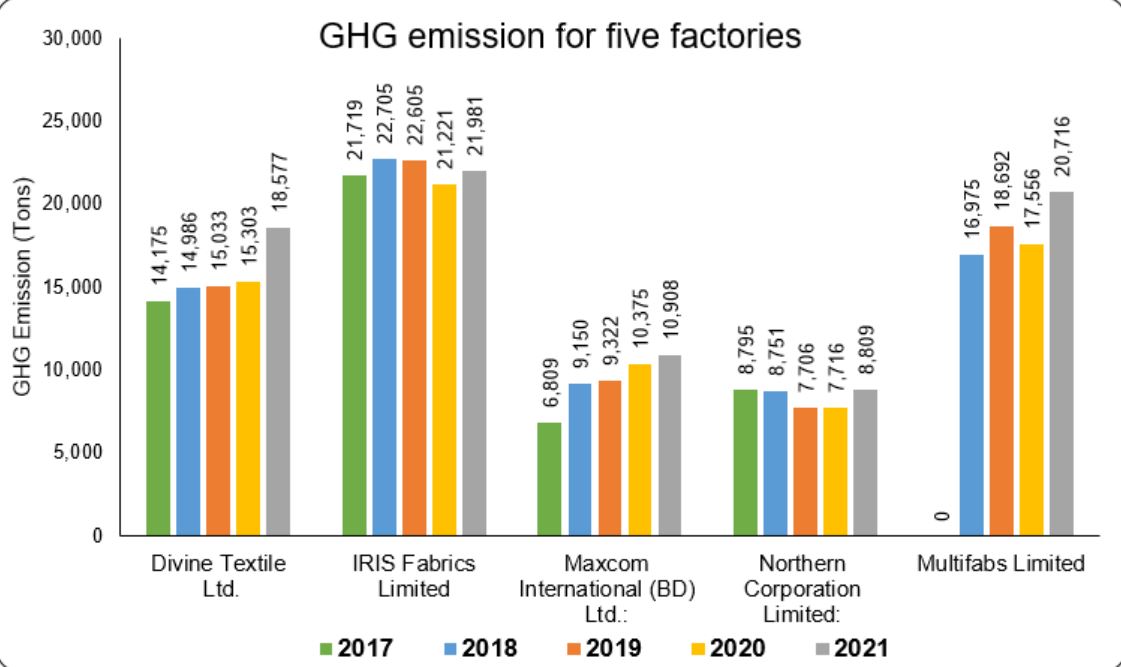
The textile industry is one of the major contributors to greenhouse gas (GHG) emissions and countries like Bangladesh are among the key hubs of this industry in the developing world. Therefore, adopting sustainable strategies in these countries is essential for environmental protection and long-term economic resilience. In our study, a comprehensive Climate Action Roadmap (CAR) has been developed with the baseline year of 2018, aiming to reduce greenhouse gas emissions by 50% by 2030. This roadmap is designed to identify and quantify both direct and indirect GHG emissions, while evaluating energy consumption, production processes and waste management practices, thereby clearly highlighting areas for improvement. Innovative technologies and process enhancements, including the adoption of renewable energy (solar and wind) alternative heating methods and efficiency-driven production strategies-have been integrated into this roadmap strategy to support significant emission reductions. This roadmap has incorporated Collaboration and Best Practices Sharing into its framework in order to ensure stakeholder engagement, accountability and progress monitoring for effective implementation in the operations of any textile industry around the world, including Bangladesh. The CAR framework will undoubtedly make an important contribution to GHG reduction by providing practical strategies to reduce environmental impacts while promoting social responsibility and sustainable economic growth. This framework provides to the textile industry a methodical and efficient route to sustainability by methodically tackling energy efficiency, clean energy integration and performance optimization. Through a thorough evaluation of textile GHG profiles and emission calculation techniques, EQMS Consulting Limited was able to create and validate this framework. The firm has also applied the CAR framework in five textile facilities with encouraging results.
For full article - jubaer.ahmed@eqmscl.com
Share this page via
More from Ahmed Jubaer